Toast Credit Card Surcharging in New York
Last updated: May 4, 2026, 4:39 PM
This content is provided for informational purposes only and is not intended as legal, tax, or other professional advice. You are responsible for your compliance with applicable laws and regulations, including card brand rules. You should contact your attorney or other relevant professional advisors for advice specific to your circumstances.
This article applies to merchants in New York State. Merchants in this state should review the content when implementing surcharging.
Any Toast customer in New York imposing a surcharge on guests for their use of a credit card must clearly post the total price for using a credit card, inclusive of the credit card surcharge, as applied to each item. This requirement is based on local laws.
- Implications to Using Toast Credit Card Surcharging
- Steps Required for Surcharging
- Examples
- FAQ
- Is credit card surcharging legal in the state of New York?
- Do I have to show two separate prices on my menus?
- Can I show two separate prices on my menus, one for credit cards and one for debit cards/cash?
- Why can’t I use Toast Credit Card Surcharging across all channels?
- What other cost-offsetting alternatives are there? Does Toast offer a compliant cash discounting solution instead?
Implications to Using Toast Credit Card Surcharging
As a result of the applicable state laws, all customers intending to surcharge with Toast need to display the total price per item, including the credit card surcharge, on all printed and on-premise menus. See examples below.
Customers surcharging with Toast in New York State must change only their printed/on-premise menu prices and NOT their prices in Toast Web. Changing printed/posted prices only will cause the prices listed on physical paper menus and menu boards to differ from the prices programmed in Toast Web. Alternatively, you can change the base price for all menu items in the POS and leave your menus as is (e.g. reduce it by 3%). The Toast Credit Card Surcharging product assesses the surcharge automatically at the point of sale for credit card transactions, using the price programmed in Toast Web as the base price.
In addition, due to the restrictions put in place by this amendment, digital channels will not be available for Credit Card Surcharging. This includes Mobile Order & Pay™, Scan to Pay, Toast Online Ordering, Toast Local, Kiosk, Catering & Events, Toast Invoicing, Third-party Ordering (e.g., DoorDash, Uber Eats, etc.). For merchants in New York, credit card surcharges are only applied to orders placed on POS/Handheld (including keyed transactions).
Steps Required for Surcharging
- Review State Law
Make sure you review and understand the relevant New York law - Update On-Premise Menus to Include Your Surcharge and Add Disclosure
All menus or other posted prices that show your in-store pricing, including your printed on-premise menus, must show prices that include the credit card surcharge. Raise the listed prices by your surcharge amount — but don’t change your prices in Toast Web. - Example:
- If you sell an item for $10 and you are surcharging at 3%, then your printed on-premise menu should show $10.30 for that item. But in Toast Web, the price for that item should remain $10.
- We recommend adding a disclosure to your menus that show in-store pricing, and all other posted prices for in-store transactions, to let your guests know that the prices shown include the credit card surcharge, and that the surcharge doesn’t apply when paying by debit card, cash, or gift card.
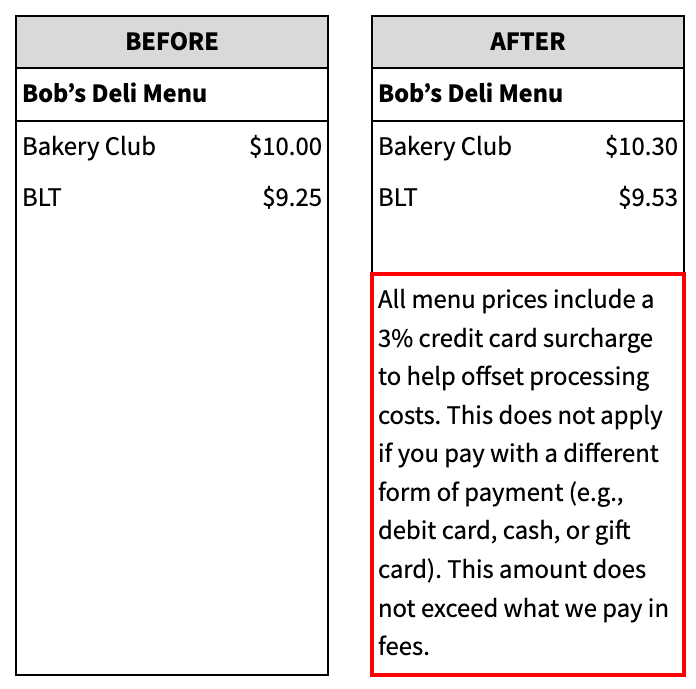
- Example: “All menu prices include a [X]% credit card surcharge to help offset processing costs. This does not apply if you pay with debit, cash, or gift card.”
Note: If your website or a third-party website shows your on-premise pricing, such as a copy of your on-premise menu(s) posted on your website or a third party website, the item prices must match your actual printed and on-premise menu pricing by including the credit card surcharge in the price, and by including the disclosure above.
- Post In-Store Signage
- Per card brand rules, you are also required to post signage regarding the credit card surcharge at the point of entry (e.g., storefront), as well as at the point of transaction (e.g., register). Toast provides signage templates you may use for this purpose, but it remains your responsibility to ensure they are posted in the proper areas.
- Train Your Staff
- Staff should understand that printed menu prices will not match the itemized receipts and be ready to explain why. They will need to tell guests that ask questions that the listed menu prices include an X% credit card surcharge that does not apply if the guest chooses to use another form of payment (such as debit card, cash, or gift card).
- Example: Using the same example as above, if a guest pays by credit card, they will see $10 for that specific item on the receipt. And at the bottom of the receipt, they will see a line for “credit card surcharge: $0.30.” In sum, the total price for the item is $10.30, matching the prices you show on your printed menus. Similarly, the check delivered to the guest prior to payment will show the $10 price and includes a disclosure that the surcharge is imposed at the point of sale if paid by credit card.
Note: If you take any orders over the phone from guests using menus that show in-store pricing, ensure that your staff verbally identify the credit card surcharge disclosure printed on the menu, explaining to guests that all prices include a credit card surcharge that does not apply if they pay by a different form of payment.
Examples
Let’s assume you have a menu item that costs $10 and another that costs $9.25. Your credit card surcharge rate is set to 3% in Toast Web. For the purposes of these examples, we will ignore tips and taxes, and we assume you do not intend to change base prices for all transactions (including credit, debit, cash and gift card payments).
Toast Web Configuration
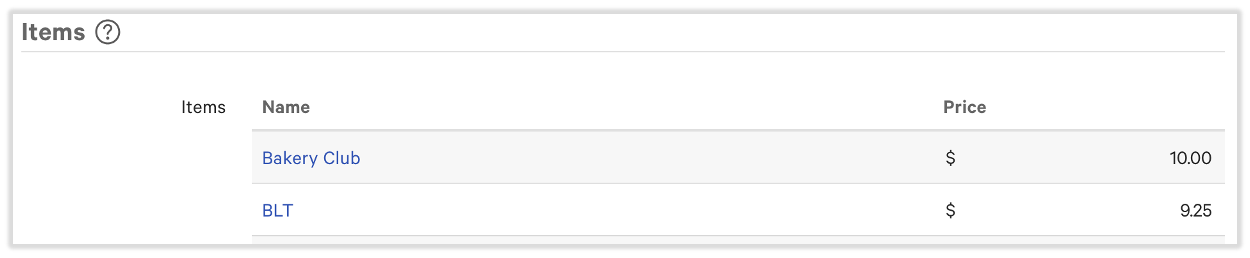
In Toast Web, keep your current menu items at $10 and $9.25, respectively. Do not make any changes to the menu item prices in Toast Web.
Physical Menus
You will need to reprint your physical paper menus and menu boards so that every item listed is raised by the exact amount of the surcharge rate, which is 3% in this example. Please make sure to accurately round up or down to the nearest penny.
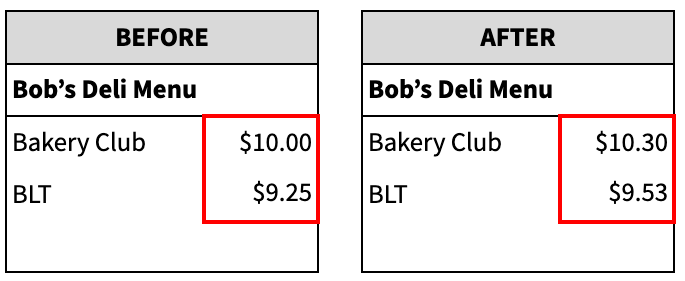
Note: You must show the higher price inclusive of the credit card surcharge on your menus and anywhere prices are advertised. You do not need to show two separate prices (one for credit and one for cash/debit), but you can if that’s your preference.
Menu Disclosure
We recommend including a disclosure on your menus and menu boards stating that all listed prices include the 3% credit card surcharge, which does not apply if your guests pay with a different form of payment (e.g., debit card or cash).
Pre-Payment Check
Depending on your restaurant format, you may provide your guests with a pre-payment check/bill or leverage the countertop guest-facing display. Either way, your guests will see itemized prices that match what is programmed in Toast Web, along with a standard credit card surcharging disclosure. Please note that the prices on the check/bill or guest-facing display will no longer match the prices listed on your physical menus.
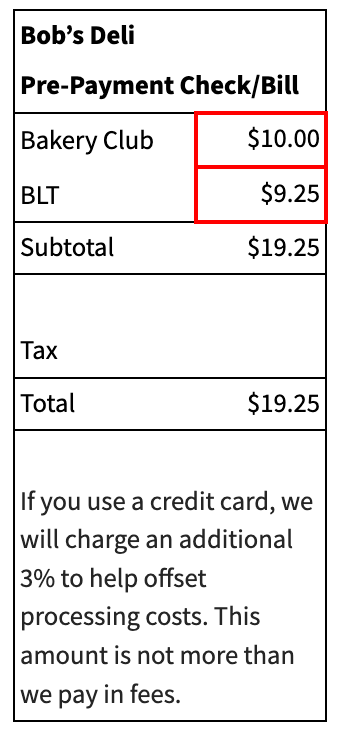
Sales tax omitted for purposes of this mock-up only.
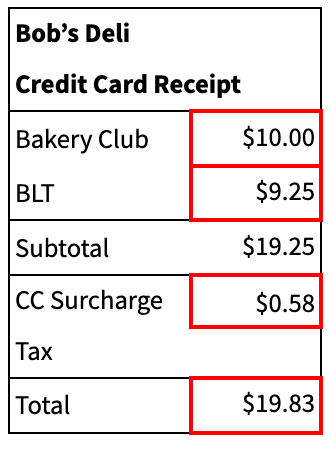
Credit Card Payments
If a guest chooses to pay with a credit card, the surcharge will be automatically applied, which is exactly how Toast’s Credit Card Surcharging solution is designed to function. On the receipt, the price of each menu item will match what is programmed in Toast Web. You can add the cost of each menu item, along with the credit card surcharge, to obtain the total that should match the listed prices on your physical menus and/or menu boards.
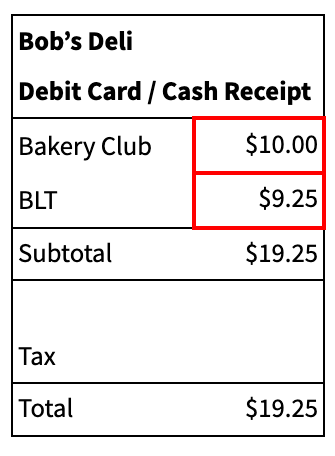
Debit Card Payments
If a guest pays with a debit card or cash, they will not be assessed the credit card surcharge. On the receipt, the price of each menu item will match what is programmed in Toast Web. These guests will pay less than the listed prices on your physical menus and/or menu boards because the listed prices include the credit card surcharge.
FAQ
Is credit card surcharging legal in the state of New York?
As always, you are responsible for determining whether your business practices are permitted under the law of your state. To get the best answer, contact your lawyer or other qualified professional. We understand credit card surcharging to be legal in New York as long as businesses include the amount of the credit card surcharge in their listed/advertised prices for each item. For more information on surcharging in New York, review the relevant law here.
Do I have to show two separate prices on my menus?
No, businesses do not need to show two separate prices on their menus. Businesses must ensure that the listed/advertised price for each item includes the credit card surcharge amount as applied to that item, but they do not need to show two separate prices.
Can I show two separate prices on my menus, one for credit cards and one for debit cards/cash?
While you are not required to show two separate prices, you can if that’s your preference.
Why can’t I use Toast Credit Card Surcharging across all channels?
Due to the law in New York, Credit Card Surcharging is not available in the following channels: Mobile Order & Pay™, Scan to Pay, Toast Online Ordering, Toast Local, Kiosk, Catering & Events, Toast Invoicing, Third-party Ordering (e.g., DoorDash, Uber Eats, etc.). In these ordering channels, the prices that are shown to customers tie directly to the prices in Toast Web, which means that you will not be able to manually raise the prices, like you can for physical in-store menus.
What other cost-offsetting alternatives are there? Does Toast offer a compliant cash discounting solution instead?
Toast’s platform does provide other cost-offsetting options that are not affected by the new law in New York:
- Add a service charge that applies to all payment methods equally. To ensure your service charge is not considered a noncompliant credit card surcharge, it must not be specific to any payment method used by the guest. Service charges must apply to all payment methods equally (including credit cards, debit cards, gift cards, and cash). Learn more here. Note that you remain responsible for compliance with any laws or regulations applicable to your service charge.
- Implement a cash discounting program. A cash discount is when only one price is presented to the guest (the card price), and if the guest pays in cash, they are offered a discount from that advertised price. You may choose to couple a cash discount program with an overall increase in menu/advertised prices that incorporate certain operating costs (such as card processing fees), but this is not a requirement. Learn more here.