xtraCHEF: Review Inventory Analytics
Last updated: Apr 8, 2026, 10:09 AM
- Inventory Analytics Summary
- Find Inventory Analytics
- Actual vs Theoretical Analysis
- Depleting Inventory
- Troubleshoot Inventory Analytics
Inventory Analytics Summary
Watch this short video to learn about the two reports featured in this article: the Actual vs. Theoretical Analysis and Depleting Inventory.
Inventory Analytics allows you to track and compare your theoretical and actual inventory consumption, monitor inventory depletion, identify waste, and control your restaurant costs for maximum profitability. This feature consists of two reports, Actual vs Theoretical Analysis and Depleting Inventory. While both of these reports build off your physical inventory counts and factor in your menu item sales and consumption, they have different value adds and use cases for your restaurant.
Find Inventory Analytics
Because these reports are based solely upon inventory, sales, and menu item consumption, you will need to have first completed inventory counts, created your recipes, and finished product mix mapping.
To view these reports, navigate to Reporting. Scroll down to the Inventory section and pick either report. Begin by selecting a start and ending inventory date. Only dates where an inventory count has been submitted are available for selection. Your opening inventory is taken from the submitted inventory values of the From date. Similarly, your closing inventory is taken from the submitted inventory values To date.
Upon selecting your date range, you will be prompted with 'How would you prefer to handle purchases and sales in this report?' To proceed, select either Include purchases and sales numbers from x start date or Include purchases and sales numbers from x end date.
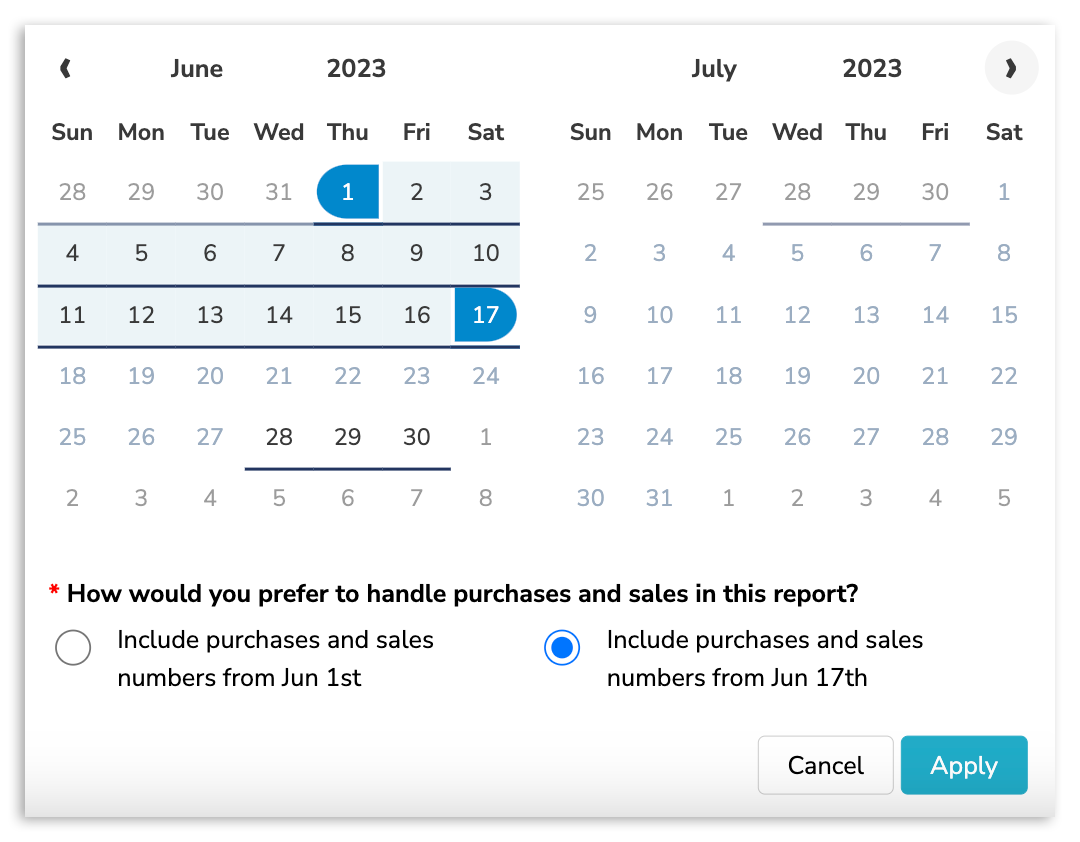
When finished, select Submit. This will set the parameters for your chosen report and populate relevant information.
Actual vs Theoretical Analysis
To best utilize your Actual vs Theoretical Analysis, it’s essential to consider how this report affects your food costs.
Understand Terminology
Your theoretical consumption is an anticipated cost for selling a menu item. It’s based on the costs of your current ingredients and assumes your kitchen or bar is serving perfect portions with no wastage, breakage, theft, or shrinkage.
Theoretical Consumption = Ingredient amount used in a recipe x number of menu items sold for that recipe
- You can repeat this calculation for each menu item containing the ingredient.
- For example, the cost of an avocado is $1 and you use one avocado in the recipe called Avocado Toast. You sold 100 Avocado Toast menu items in the selected period, so 1 avocado x 100 sales = 100 avocados of theoretical consumption quantity. Your theoretical consumption cost is $1 cost per avocado x 100 avocados= $100.
On the other hand, your actual consumption is your true cost. This considers the true portions of the ingredient used and factors in any wastage, breakage, and shrinkage. In almost all cases, your actual food cost will always be higher than your theoretical food cost, as it includes additional factors. The difference between your actual and theoretical is termed variance. Variance usually occurs whenever there is a waste of resources, inaccurate portions of meals/drinks, theft, unrecorded sales entries, or error in stock take.
Actual Consumption = opening inventory + purchases made during the period - closing inventory
- If you select the dates January 1st - January 7th, your opening inventory will be the inventory submitted on January 1st and your closing inventory will be the inventory submitted on January 7th.
- For example, your opening inventory on January 1st is 50 avocados. On January 5th, you purchased 100 avocados. Your closing inventory on January 7th is 60 avocados. 50 + 100 - 60 = 90 avocados of actual consumption.
The difference between your actual and theoretical is termed variance. Variance usually occurs whenever there is a waste of resources, inaccurate portions of meals/drinks, theft, unrecorded sales entries, or errors in stock take.
Variance = actual consumption - theoretical consumption
- In the avocado example above, your actual consumption is 90 avocados and your theoretical consumption is 100 avocados, so your variance is 10.
View Actual vs Theoretical Analysis
Navigate to Reporting and select the Actual vs theoretical report. First, select your date range. When viewing your Actual vs Theoretical Analysis, you have the option to have data presented to you either by cost or quantity. To toggle between the two, use the Cost or Quantity slider. You may need to scroll horizontally to see some columns on this report.
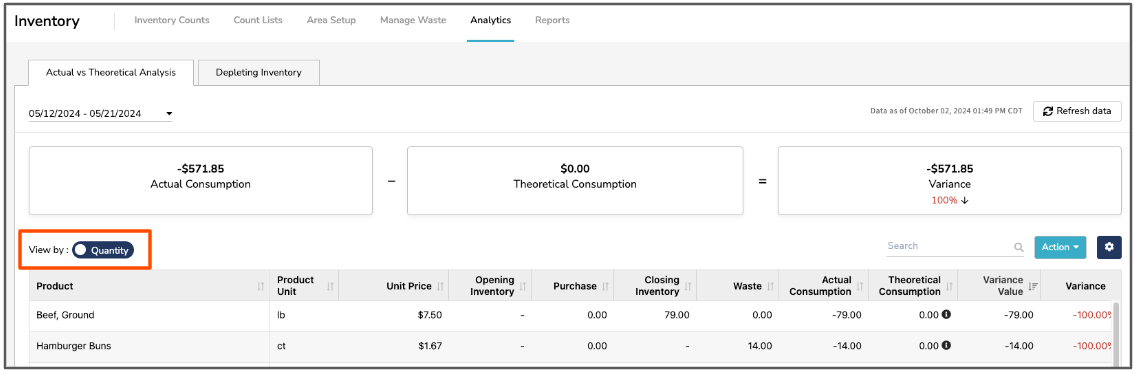
What is each product's unit price?
xtraCHEF added a column to view the unit price of each product quickly.
What is my wastage?
Your wastage indicates the cost or quantity of an ingredient that has been logged as waste. This can be done via the Manage Waste function in the Inventory module. Logging waste allows you to separate avoidable incidents such as breakage and ingredient spoiling from your variance.
Leverage Actual vs Theoretical Analysis
Using your Actual vs Theoretical analysis allows you to keep tabs on your variance and identify certain ingredients and inventory items where unintentional waste, breakage, and shrinkage may be playing a factor.
In xtraCHEF, a high variance would indicate a significant gap between what you expect to pay per menu item and what you are paying. The same logic also applies to a slight variance, which indicates your theoretical food costs are or are close to spot on. To keep tabs on how variances fluctuate from inventory count to inventory count, check in on this report frequently to keep a pulse on these factors. For more information on actual vs. theoretical, visit xtraCHEF: Get Started with Actual vs. Theoretical Analysis Reports.
Depleting Inventory
Your Depleting Inventory report lets you track how consumption affects your par levels (the minimum amount of an item you need to keep in-house) and provides insight into your usage and ordering.
More specifically, Depleting Inventory compares your opening Inventory, purchases, wastage, and theoretical consumption to determine what you have on hand. If you have par levels established, this report will also create a To be ordered amount. Considering these factors, the depleting inventory count can be used to track trends in your usage of specific ingredients and items and monitor inventory levels based on theoretical consumption.
View Depleting Inventory
Navigate to Reporting and select Depleting inventory from the Inventory section. When viewing your Depleting Inventory report, you have the option to have data presented to you either by cost or quantity. To toggle between the two, use the All or PAR Level slider.
What is my wastage?
Your wastage indicates the cost or quantity of n ingredient that has been logged as waste. This can be done via the Manage Waste function in the Inventory module. Logging waste allows you to separate avoidable incidents, such as breakage and ingredients spoiling, from your variance.
What is my theoretical consumption?
Your theoretical consumption is the cost or value consumed theoretically based on your recipes. A recipe will indicate which and how much of an ingredient is used per menu item transaction. xtraCHEF records these details in the background as it captures sales.
What is my inventory on hand?
This is how much of an invoice item you have on hand based on your opening inventory, purchases, wastage, and theoretical consumption.
What is my PAR?
This is the amount of a specific invoice item that you want to have in inventory at all times. You can establish this number while creating your inventory count lists.
What is my To be ordered?
The To-be-ordered amount is the difference between your Inventory on Hand and your PAR Level. This amount indicates how much you will need to order to stay on PAR.
Leverage Depleting Inventory
Depleting inventory can be used to identify where you’ve ordered too much or too little. Leveraging this tool can help ensure waste isn’t incurred when an excess amount of an ingredient is purchased. Likewise, identifying where too little of an ingredient was purchased helps ensure no revenue is lost from being unable to prepare a menu item or emergency orders needing to be placed outside of your typical supply chain.
Troubleshoot Inventory Analytics
Does something with your inventory appear incorrect or off? Consider the following troubleshooting steps to identify the root cause of your issue.
Theoretical Consumption
Theoretical consumption is solely based on your menu item sales and their corresponding recipe in xtraCHEF. You can connect Recipes to Toast menu items when creating or editing recipes.
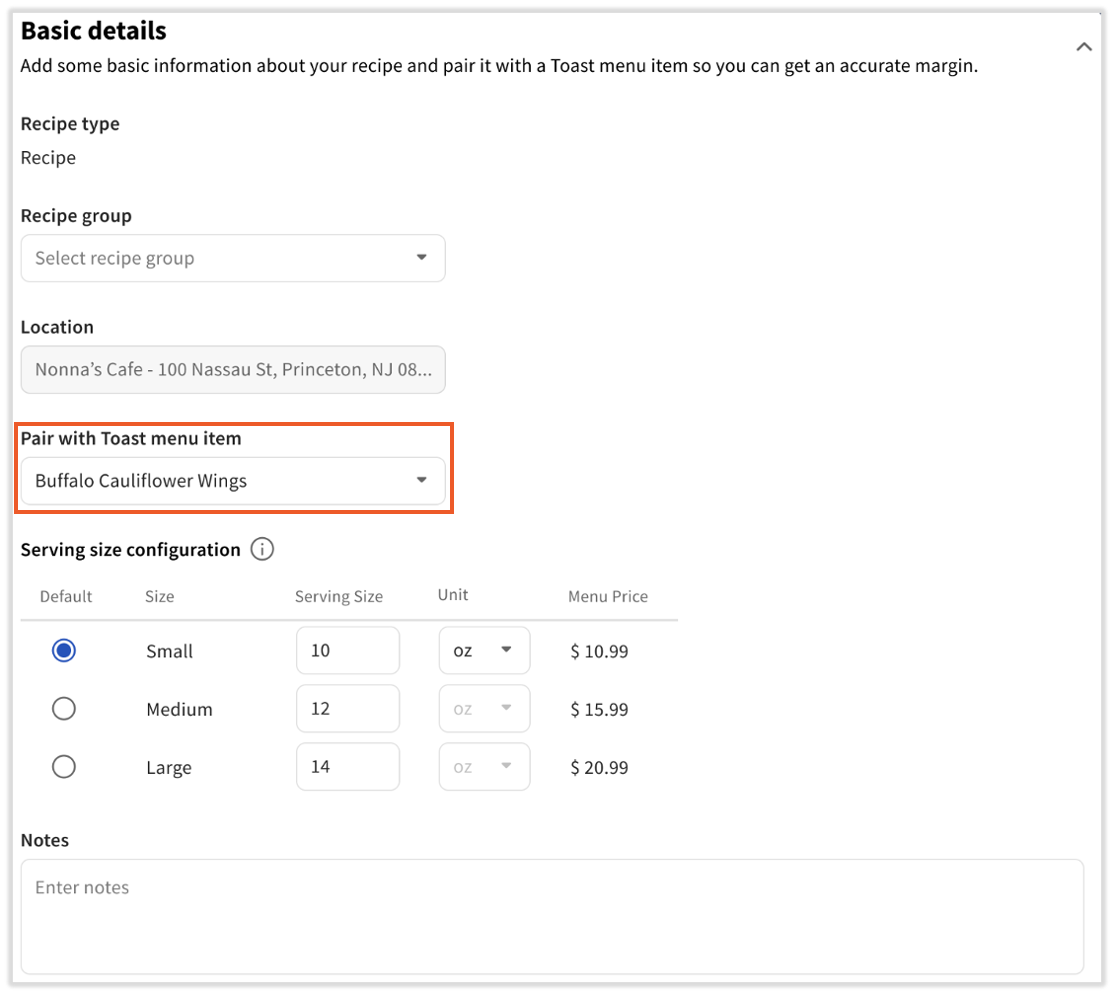
Because of that, any instances where theoretical consumption appears incorrect or skewed are typically the result of an incorrectly configured recipe or product.
To investigate:
- Check errors on the Actual vs. Theoretical Analysis. On this page, there will be alert icons to indicate common errors like when a product is not included in any recipe or, when a recipe is not linked to a menu item.
- For example, the garlic product below displays 0.00 for theoretical consumption because there are no sales for this product during the selected time period.
- For example, the garlic product below displays 0.00 for theoretical consumption because there are no sales for this product during the selected time period.
- Check your recipe.
- Do your products have the correct unit of measure and measurements? If not, make corrections to the recipe. You can now search for the product directly via the recipe search bar to locate what recipes have this product included as an ingredient.
- Do the prices for each product and measurement appear correctly? If not, a product may contain invoice items that had been set up incorrectly in Item Library, but you can easily correct this.
- Consider prep recipes.
- Did you use prep recipes within your recipe? If so, review the product considerations above for the prep recipe(s) in question.
- Review your modifier selections in product mix mapping.
- Did you assign the correct products, measurements, and units of measure?

Actual Consumption
Actual Consumption is based solely on your physical inventory counts. Instances where your actual consumption appears incorrect or skewed are typically the result of your inventory's opening and closing quantities in inventory.
To investigate, review your opening and closing inventory quantities in Inventory for any discrepancies. Incorrectly entered item quantities or missed products would disrupt your actual consumption.